Serbia's Relationship with NATO: The Fine Balance of Neutrality
Serbia's Relationship with NATO: The Fine Balance of Neutrality
Serbia, a country with a rich history and a unique position in the Balkans, maintains a delicate relationship with NATO (North Atlantic Treaty Organization) that reflects its historical complexities, regional role, and strategic priorities. Since the breakup of Yugoslavia in the early 1990s , Serbia's path has been shaped by internal strife, regional conflict, and broader geopolitical shifts in Europe. Its relationship with NATO is particularly intricate due to the 1999 NATO bombing during the Kosovo War, domestic political pressures, and Serbia's official military neutrality.
This article delves into Serbia's relationship with NATO, examining its historical background, the nature of its neutrality, the strategic cooperation that exists despite neutrality, and the challenges Serbia faces as it balances its relationships with both Western and Eastern powers.
A Brief History of Serbia and NATO
Yugoslavia and the Breakup
Before understanding Serbia's current position, it's crucial to look at its historical ties to NATO through the lens of its predecessor state, Yugoslavia. During the Cold War, Yugoslavia, under the leadership of Josip Broz Tito, pursued a policy of non-alignment. Despite Being a communist state, it distanced itself from the Soviet Union after a rift in 1948, which allowed it to chart a neutral path between the Western and Eastern blocs.
Yugoslavia had a cordial but cautious relationship with NATO during the Cold War, primarily because it was not part of the Soviet-led Warsaw Pact. However, this relationship remained largely limited and was based on shared interests in maintaining stability in the region, rather than military cooperation.
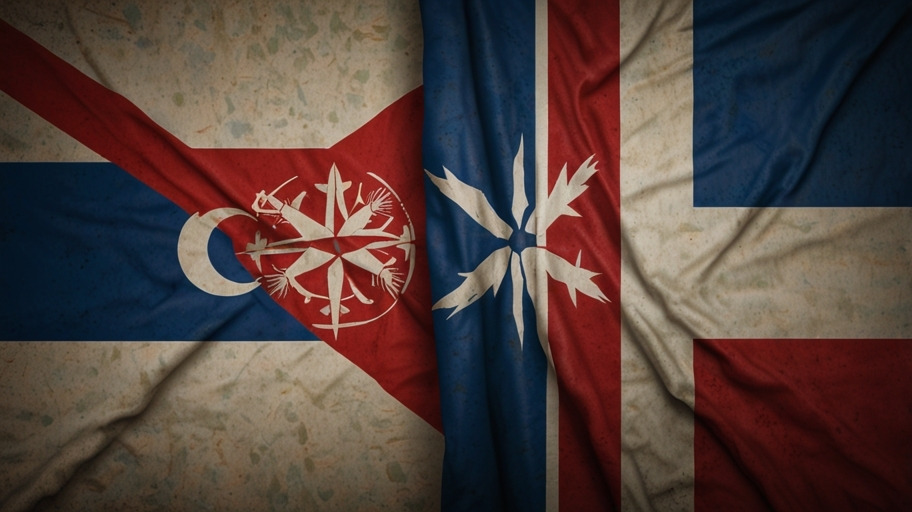
The 1990s and the Kosovo Conflict
The 1990s marked a significant turning point in Serbia's relationship with NATO, as Yugoslavia disintegrated into separate states and ethnic conflicts erupted across the region. The most critical moment came during the Kosovo War in 1998-1999. NATO, without the backing of the United Nations Security Council, launched an aerial bombing campaign against Yugoslavia (by then comprising only Serbia and Montenegro) to stop the violent crackdown on ethnic Albanians in Kosovo.
The NATO bombing campaign lasted 78 days and caused widespread destruction, infrastructure damage, and loss of life in Serbia. For many Serbs, this intervention remains a deeply emotional and traumatic event. It is seen not only as a foreign military aggression but also as a humiliation and violation of national sovereignty. Even today, the NATO intervention in Kosovo is a significant factor in Serbia's foreign policy, with many Serbs harboring resentment towards the alliance.
Kosovo declared independence from Serbia in 2008, a move recognized by many NATO member states, including the United States and the majority of European Union (EU) countries. However, Serbia continues to reject Kosovo's independence, further complicating its relations with NATO and the broader Western bloc.
Serbia's Military Neutrality: A Delicate Balance
In the aftermath of the Kosovo conflict and the 1999 NATO bombing, Serbia's foreign policy orientation took on a unique form: military neutrality. This policy of neutrality was formalized in 2007 when Serbia's National Assembly adopted a resolution declaring that Serbia would not seek membership in any military alliances, including NATO. This position was largely shaped by the events of the 1990s, Serbia's historical ties to Russia, and domestic public opinion, which remains overwhelmingly against NATO membership.
Domestic Public Opinion
Public sentiment in Serbia is a crucial factor in understanding the country's stance toward NATO. Surveys consistently show that a majority of the Serbian population opposes joining NATO, with the memory of the 1999 bombing still fresh in the national consciousness. National pride, historical narratives, and the portrayal of NATO as an aggressor in the state-controlled media all contribute to this widespread opposition.
Political leaders, including President Aleksandar Vučić, have often reflected this sentiment, stressing that Serbia's neutrality is a sovereign decision and one that respects the wishes of its citizens.Moreover, Serbia's close historical and cultural ties to Russia also play a part in shaping public opinion , as Russia has long been seen as a protector of Slavic and Orthodox Christian interests in the region.
Russia's Role
Russia, as Serbia's traditional ally, opposes NATO expansion in the Balkans and has repeatedly supported Serbia's stance on Kosovo. The two countries share deep historical, cultural, and religious bonds, with Russia consistently standing by Serbia in international forums, including the United Nations, to block any attempts to fully legitimize Kosovo's independence.
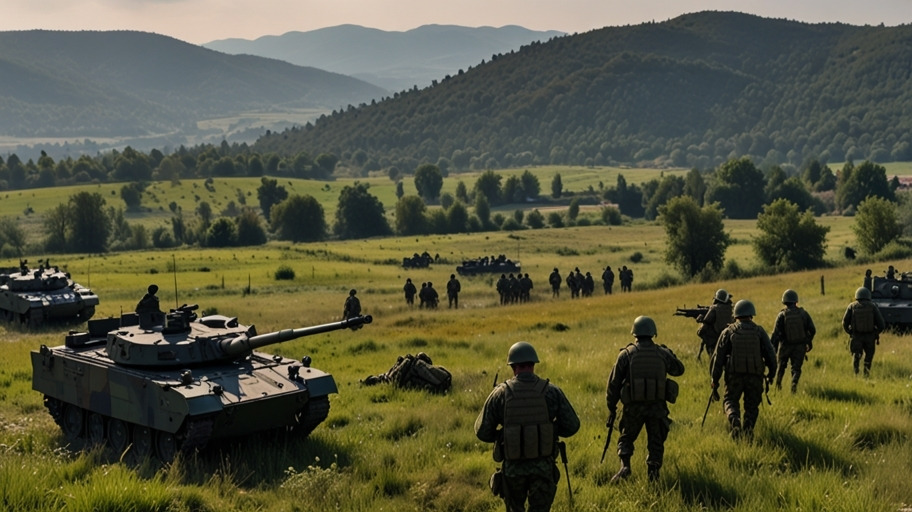
Serbia's military neutrality has often been interpreted as a strategy to maintain close ties with Russia while avoiding direct confrontation with NATO. Serbia purchases military equipment from Russia, and Russian military personnel have participated in joint exercises with Serbian forces. Despite this, Serbia is cautious not to align itself too closely with Moscow, as it seeks to maintain a degree of independence and flexibility in its foreign policy.
Cooperation with NATO: Pragmatism in Neutrality
Despite the complex historical backdrop and Serbia's military neutrality, the country has maintained pragmatic, cooperative relations with NATO over the years. This cooperation exists within the framework of NATO's Partnership for Peace (PfP) program, which Serbia joined in 2006.
Partnership for Peace (PfP)
NATO's Partnership for Peace program is a flexible framework for cooperation between NATO and non-member countries, allowing them to engage in joint military exercises, defense planning, and crisis management without committing to full NATO membership. Serbia's participation in the PfP allows it to benefit from training, technical assistance, and the modernization of its military forces.
Serbia and NATO have engaged in various joint military exercises, particularly in disaster relief and peacekeeping missions. The Serbian military has also contributed to NATO-led missions, such as the International Security Assistance Force (ISAF) in Afghanistan, highlighting Serbia's willingness to engage with NATO in specific areas of mutual interest.
Serbia's Role in Regional Stability
One of the primary reasons for Serbia's engagement with NATO is its role in maintaining stability in the Western Balkans. The region has historically been a flashpoint for conflict, and NATO's involvement in peacekeeping missions in places like Bosnia and Herzegovina and Kosovo has been critical in maintaining peace.
Serbia, as the largest and most populous country in the Western Balkans, plays a central role in the region's stability. Its cooperation with NATO, even within the bounds of military neutrality, is seen as essential to preventing a resurgence of ethnic violence and instability in neighboring countries. This cooperation is often viewed through the lens of crisis management and the prevention of humanitarian disasters, areas where NATO and Serbia have common interests.
Balancing EU Aspirations
Serbia's relationship with NATO is also influenced by its aspirations to join the European Union (EU). While NATO and the EU are separate organizations, there is significant overlap between their memberships, with many EU countries being NATO members.
EU accession is a key strategic goal for Serbia, and its cooperation with NATO is partly driven by the desire to align its defense policies with EU standards. The EU emphasizes the importance of regional cooperation and stability in the Balkans, and Serbia's pragmatic engagement with NATO helps it demonstrate its commitment to these goals, even as it maintains its official stance of neutrality.

The Kosovo Factor: A Stumbling Block
One of the most significant obstacles in Serbia's relationship with NATO is the issue of Kosovo. As mentioned earlier, NATO played a pivotal role in Kosovo's secession from Serbia, and the alliance's continued presence in Kosovo through the Kosovo Force (KFOR) peacekeeping mission is a point of contention for Belgrade.
KFOR and Tensions in Kosovo
NATO's KFOR mission, established in 1999, remains responsible for maintaining peace and security in Kosovo. While Serbia does not recognize Kosovo's independence, it has accepted KFOR's role as a neutral peacekeeping force, although with some reservations. However, occasional flare-ups of tensions between Kosovo and Serbia, especially in the predominantly Serb-populated areas of northern Kosovo, have strained relations between Serbia and NATO.
In recent years, Serbia has accused NATO and KFOR of being biased in favor of Kosovo's ethnic Albanian majority, particularly during periods of unrest. These accusations, combined with Serbia's refusal to recognize Kosovo's independence, create an ongoing source of tension in Serbia's relationship with NATO .
The Geopolitical Chessboard: Balancing East and West
Serbia's relationship with NATO cannot be understood without considering the broader geopolitical context in which the country operates. The Western Balkans is a region where the interests of major global powers—such as the United States, Russia, and the European Union—converge. Serbia, situated at the crossroads of East and West, seeks to balance these competing influences while preserving its sovereignty and independence.
The Influence of Russia
Russia remains a key player in the region, and its influence over Serbia is significant. Moscow views Serbia as a critical ally in the Balkans and a bulwark against NATO's eastward expansion. Serbia's refusal to join NATO aligns with Russia's strategic interests, and Moscow has provided political, military, and economic support to Serbia, particularly on the issue of Kosovo.
Russia's military cooperation with Serbia, including the sale of advanced weapons systems and participation in joint exercises, is a source of concern for NATO. However, Serbia has taken care not to allow this cooperation to escalate into full-scale military alignment with Russia, as it seeks to avoid alienating the West.
Serbia's relationship with the EU
At the same time, Serbia's ambition to join the EU requires careful diplomacy. While the EU is not a military alliance, many of its member states are part of NATO, and Serbia's progress towards EU membership is linked to its ability to maintain regional stability and engage constructively with NATO.
The EU has consistently supported Serbia's path towards membership but has also made it clear that normalization of relations with Kosovo is a prerequisite. This places Serbia in a difficult position, as it seeks to balance its EU aspirations with its refusal to recognize Kosovo's independence and its complicated relationship with NATO.
Conclusion: Navigating a Complex Landscape
Serbia's relationship with NATO is defined by a fine balance of neutrality, pragmatism, and geopolitical considerations. While historical grievances, particularly the memory of the 1999 bombing campaign, continue to shape public opinion and political discourse in Serbia, the country has found ways to cooperate with NATO in areas of mutual interest, such as regional stability and crisis management.
At the same time, Serbia's military neutrality allows it to maintain close ties with Russia while pursuing its strategic goal of EU membership. This balancing act requires careful diplomacy, as Serbia navigates the complex geopolitical landscape of the Western Balkans, where the interests of global powers frequently collide.
In the years to come, Serbia's relationship with NATO will continue to be shaped by these competing forces, as the country seeks to protect its sovereignty, maintain regional stability, and chart its path toward a future that balances East and West.